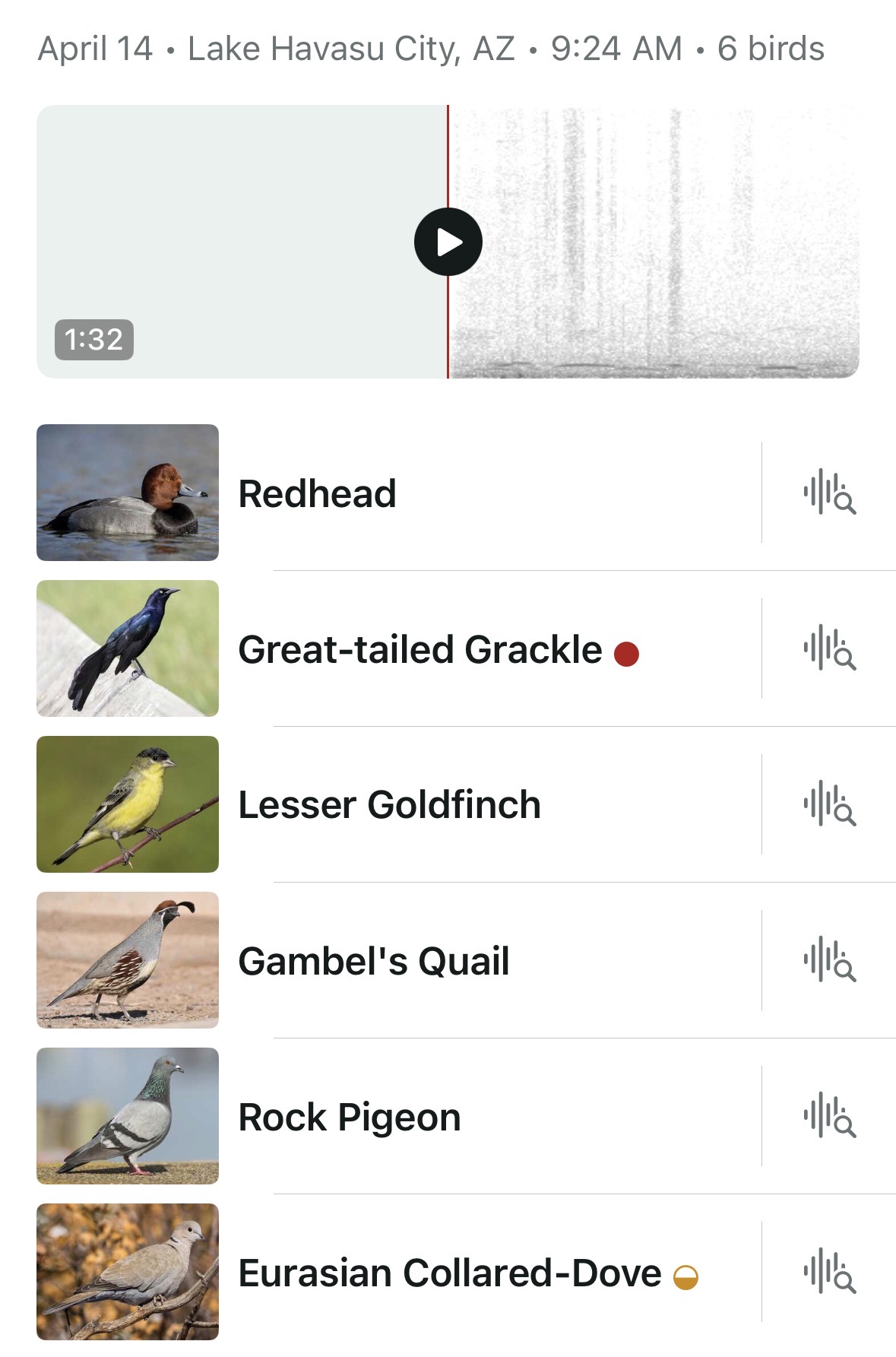
I’ll be the first to admit, like many people, I spend way too much time on my phone.
Phones and nature typically don’t go hand-in-hand. So much of enjoying nature is being fully present and the doom devices in our pockets don’t really allow for that.
But, on a recent vacation, I was reminded of one of the rare exceptions.
I have always enjoyed birds. But, being of a certain age, I am more hardcore about birding than I used to be. I hit my birdwatching phase of life, you could say.
Birding is a uniquely approachable way to interact with nature because you can do it anywhere and, at a minimum, all you need is your eyes, ears, and a little bit of knowledge.
I’m far from an expert, but I like to think I know my stuff. Bird identification is a skill I’ve spent a lot of time honing the last few years and it certainly makes birding more enjoyable. Like anything, developing that skill takes time and practice. Once you hit your stride, it’s easy to forget how far you’ve come. This trip to the American Southwest reminded me of the tools technology provides to help make that learning curve progress faster.
My family and I were in Lake Havasu City, Arizona visiting my wife’s aunt. Her back patio offered scenic views of the mountains and lake, along with occasional opportunities to observe the local desert wildlife.
I quickly realized that many of the new and exciting nature experiences were the subtle ones. The rabbits were different than the ones back home in Wisconsin and the neighborhood birds seemingly all sang songs that were unfamiliar to me. In a way, I felt like I was starting over on my birding journey.
This getaway was a short one, so I knew I’d have to be a quick study if I wanted to get the most out of my birdwatching chances. So I leaned on a pair of tools that helped get me to the level of knowledge I’m at today. If you’re new to birding or just want to get better faster, here are a two pieces of technology that can help you do just that. Even better? They’re both free.
Merlin
I’ve found Merlin Bird ID to be the most useful app for beginners or anyone who finds themself birding in a new place. Hit a button and the app will use your phone’s microphone to listen for bird songs. It will then identify the song of each species it picks up.
If you have a picture of a bird, you can upload it the app, answer a few simple questions, and it will give you a list of possible species. In my experience, even grainy cell phone pictures can often lead to the correct results. It’s impressive.
Merlin is basically Shazam for birds, with a visual search engine built in.
Part of learning what you’re looking at is knowing what you’re even looking for. That’s where this app comes in. It’s a fast way to get an idea of the different species that are in your immediate vicinity.
Birding is about learning to use your eyes and your ears. In many cases, you will hear a bird long before you will be able to pick it out, even with binoculars. Matching sounds with visual characteristics is a quick way to learn your birds.
eBird
Once you have a better grasp of what you’re seeing, it’s time for Merlin’s sister app: eBird.
At its core, eBird is a worldwide database of bird sightings compiled by fellow birders around the world. Birders submit checklists that show the species they observed, how many of each they saw, and the location where they saw them. This information is used by scientists and birdwatchers alike.
Its search function can give you a list of recent sightings, sorted by species, as well as when and where they were seen. This can help you familiarize yourself with a new spot or keep tabs on the migration. It can also serve as your personal log of sightings as you build your life list.
So, if you want to get into birding or just accelerate the learning process, give these apps a shot and keep your phone nearby when you’re outside. Just don’t forget to keep looking up.


Leave a Reply