Spring can be one of the best seasons to catch fish.
But this time of year can also be one of the most frustrating for anglers, especially for those of us who live in places susceptible to especially volatile weather like Wisconsin.
One day, it seems spring has surely arrived. The sun is shining, the birds are singing and you’re itching to hit the water. The next morning, you wake up to find that you need to shovel snow from your driveway so you can get to work.
Just last week, the high temperature was 72 on Wednesday. By Thursday morning, it was 16 degrees outside. What’s an ambitious angler to do during a time of 56-degree temperature swings?
Tune out the noise and focus on one of the most reliable factors of fish activity in spring: water temperature.
To regularly catch fish, you must understand fish, if only at a basic level.
Many of the best springtime fishing opportunities revolve around pre- and post-spawn fish. Before spawning, many fish beef up prior to undertaking this energy-consuming task. Post-spawn fish need to replenish nutrients to recover from said activity.
Fish have evolved to spawn during periods when their eggs (and subsequent young) are most likely to survive. It’s a product of natural selection. Proper water temperature can mean everything from ideal oxygen levels to an assurance of a food supply or vegetative cover for the spawning fish and their young. This often makes water temps one of the primary drivers of fish activity early in the open water season.
We’ll get into more of the “why” in a moment. But, if you found this page, you’re probably looking for a firm tip, and I don’t want to bury this one any deeper in the story than I already have, so here it is:
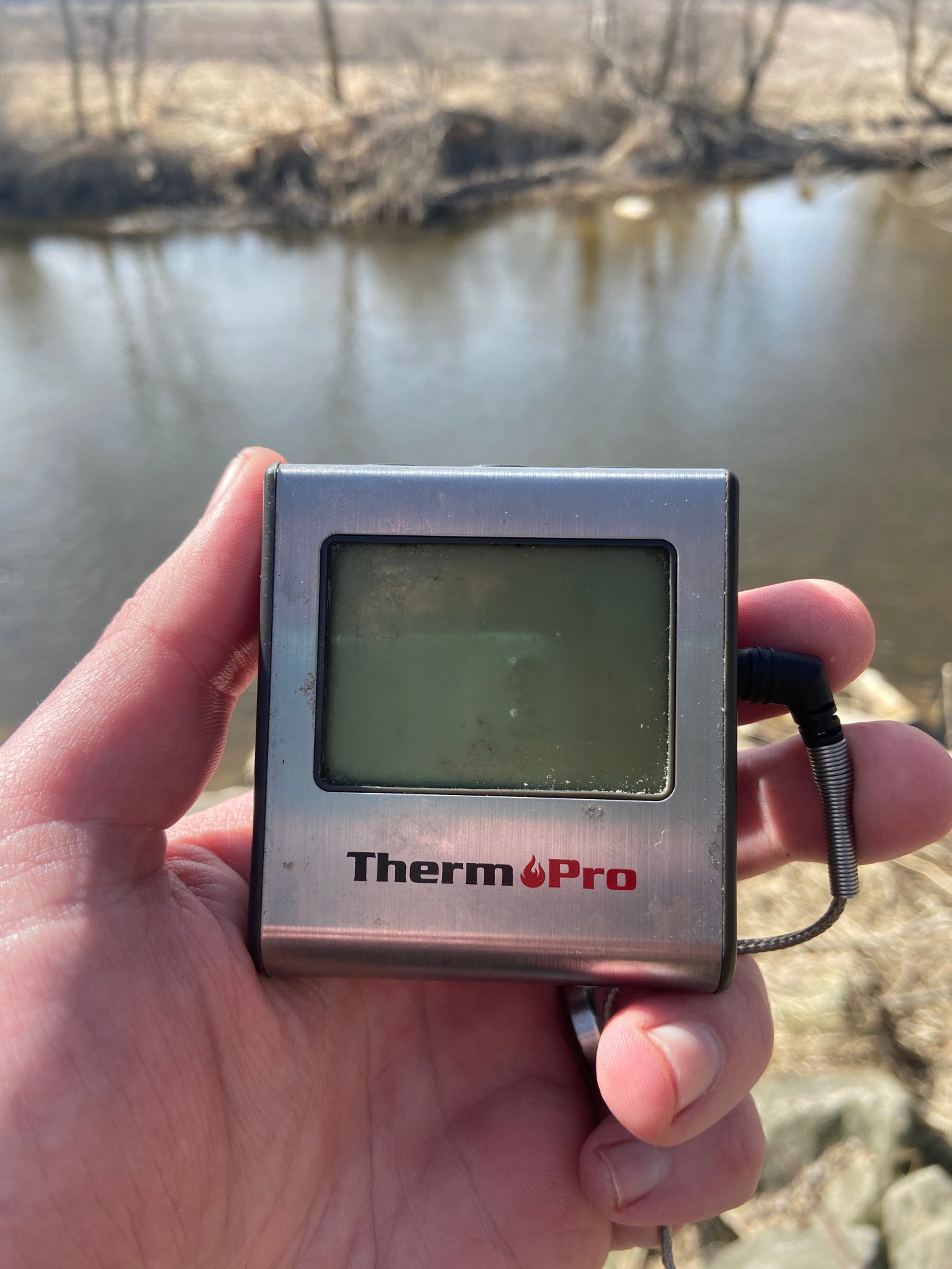
If you’re a boat angler, pay attention to the temperature readings on your electronics. If you fish from shore or a canoe or kayak, I strongly suggest investing in an instant-read thermometer so you can easily assess water temperatures wherever you go.
When it comes to fish activity, air temperatures do little more than provide context for what is likely happening in the water. But it is by no means an assurance of conditions of fish habitat.
Think of it this way: You’re sitting in your house and it’s freezing outside. Do you immediately run to your dresser and add three layers? Probably not. Because the environment where you live is likely perfectly suited to your preferences. Even if your heat isn’t working, the temperature in your house won’t be immediately impacted in a significant way. It takes time.
What’s going on outside of your environment only matters insofar as at impacts your immediate environment. Water is a fish’s immediate environment and changes in air temperature don’t always mean immediate changes in water temperature.
Yes, other factors such as photoperiods and flow can play a role in fish activity as well. But water temperature is one of the easiest, most consistent starting points.
While understanding this will go a long way in providing fishing success, it is important to understand the context of your readings. In most cases, you are only getting information on the surface temp. The deeper your spot is, the less relevant that information becomes. This isn’t to say it’s useless, but it needs to be taken with a grain of salt.
It is crucial that you research your target species and have a thorough understanding of the range of water temps that spark spawning activity. For example, smallmouth bass in Wisconsin generally spawn when water temperatures are between 62-64 degrees. So just because Mother Nature strung a few warm March days together, that doesn’t necessarily mean the smallies will be snapping at your local honey hole.
Fish largely don’t care what the calendar says, either. No matter how many times you’ve caught walleyes in March or suckers in April over the years, if the water temp says the time is right during a different month, odds are, the fish are moving through their spawning cycles. This is a particularly important point given the rapid shortening of Wisconsin’s winters in recent years.
So, if you want to catch more fish in spring, make sure you have a method of reliably collecting water temperatures. It can streamline your path to success.
 Nathan Woelfel Outdoors
Leave a comment