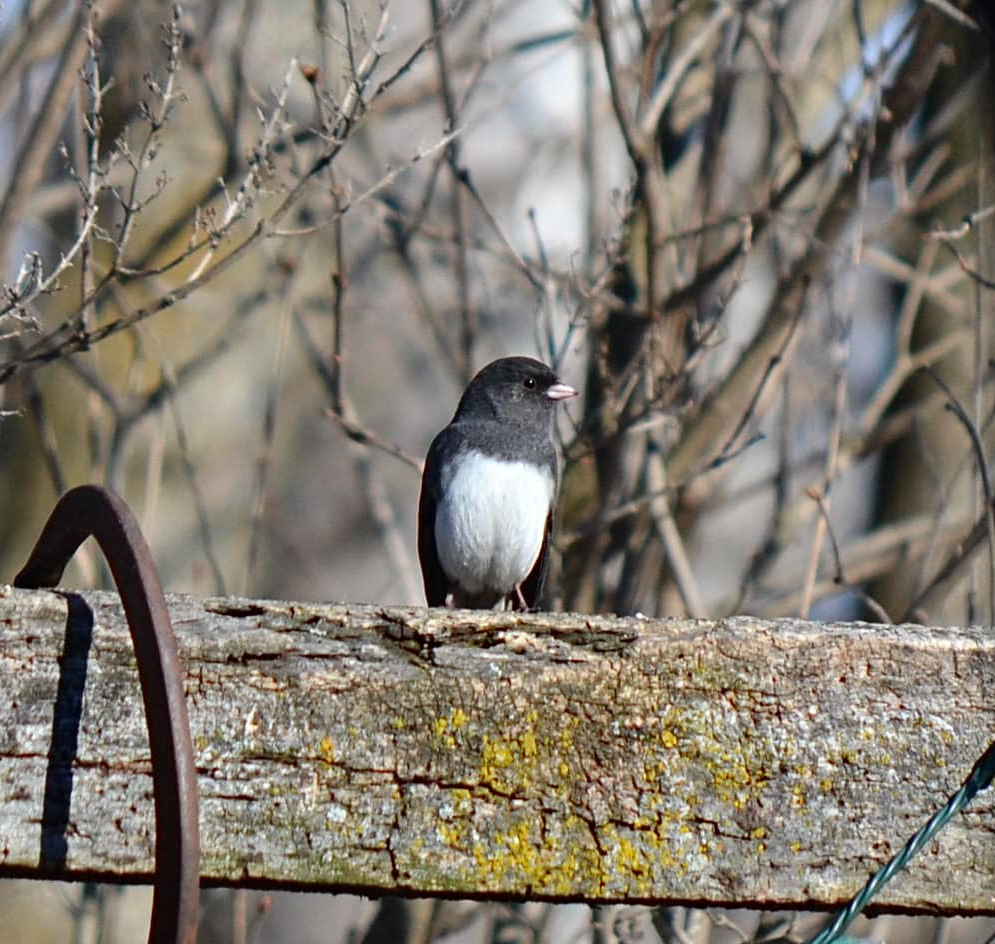
When my wife and I bought our first home, I knew I wanted to put a bird feeder in our backyard. I greatly desired having a little slice of nature in the middle of our town.
As someone who tries to be conservation-minded, before I went to the hardware store and bought all of the necessary supplies, I stopped to ponder a question I still ask myself to this day: “Is it OK to feed wild birds?”
A quick Google search brought me to an article on this topic from the Wisconsin Department of Natural Resources. The message I took from that piece was: if you’re willing to properly place and maintain your feeders, you’re good to go. With my conscience satisfied, I marched down to the store, got a pair of feeders and a bag of seed, and set everything up in my yard the following day.
But, as time has passed and I have continued reflecting and researching, I’ve found the ethics behind feeding birds is far more complicated than I had originally thought.
So, do I still think it’s ethical to feed birds? My new answer is: it’s complicated. Like many things in life, there is a lot of nuance. If there was a straightforward answer, there wouldn’t be any sense in writing an article about it.
I’ve come to view the application of ethics to bird feeding to be something of a spectrum. Is it outright ethical? Possibly not. But there are certainly a host of things you can do to go about feeding birds as responsibly as you can.
Let’s unpack some of the things to consider when deciding if/how to feed the birds in your yard.
What is your definition of “feeding birds?”
For most of us, when we thinking of feeding birds, we envision the typical feeder setup – a tube, platform, or suet outfit filled with bird delights and proprietary blends from our local grocery store or co-op. And while that can be just fine in certain circumstances (more on that later), there is a better way.
An angle we often fail to consider is feeding birds by providing them with native vegetation that produces food naturally, such as seed trees, shrubs that produce berries, and wildflowers.
In all likelihood, the land your house or apartment is sitting on used to be bird habitat at one point. Habitat that provided both food and protection. Ultimately, one of the best things you can do for birds is replacing as much of that missing habitat as you can.
Now, I get it, not everyone can or is willing to re-arrange their yards to create a bird sanctuary. You can still help birds by taking smaller steps such as only mowing where it is absolutely necessary and minimizing the portions of your property that are mowed regularly.
Are you actually helping the birds?
Wait, can’t feeding birds help them?
Well, sometimes. It depends on the situation.
During migration or particularly harsh winters, birds can certainly benefit from added opportunities for nutrition. But, in summer, birds are far more likely to be in need of water than food. Remember, our feathered friends have other vital needs.
Feeders can also be helpful in places where significant habitat has been lost and food isn’t as readily available as it has historically been which, let’s face it, is most places in Wisconsin at this point.
But, if you aren’t thoughtful, you could be doing more harm than good. If you’re using bird seed that is packed full of filler ingredients like milo, wheat, or oats that are void of nutritional value, you’re basically just providing your feathered friends with junk food.
If your feeders are in locations that gives predators such as feral cats or foxes easy access, you’re just setting up an all-you can eat buffet for four-legged critters. What’s worse, using cheap feed can lead to birds discarding it on the ground. This, in turn, attracts rodents which attract predators. Predators who would gladly snatch up a bird while they’re at it, if the opportunity presented itself. If you have predators in your neck of the woods, their very presence is proof they don’t need your help. So don’t give it to them.
Are you properly maintaining your feeders?
I’ve discussed proper maintenance of bird feeders at length.
Feeding birds is a commitment. If you’re not willing to do the right things, you (and the birds) are better served by not having feeders in your yard at all.
If you don’t frequently replenish your feeders, you are just giving birds a false sense of security. That isn’t fair to them because they are, in many ways, incapable of knowing better. But you are. If you are going to feed birds, feed birds. Keep your feeders well-stocked.
Cleaning is an often overlooked component of bird feeders. Without regular washing, bird feeders can quickly become hubs for diseases that can quickly spread throughout bird populations.
Alright, seriously, should I feed birds or not?
In my book, that choice is ultimately yours to make.
From our human perspectives, having birds frequent our yards is a beautiful thing. It’s an opportunity to connect with nature and enjoy some of its small wonders. I would never tell you to stop seeking that. But I would ask that you consider how you go about it and the cost the birds have to pay for those experiences.
For the time being, I plan to continue feeding birds in my yard. But I will keep striving to be as thoughtful about the most productive and responsible ways to do it. I urge you to do the same.
 Nathan Woelfel Outdoors
Leave a comment